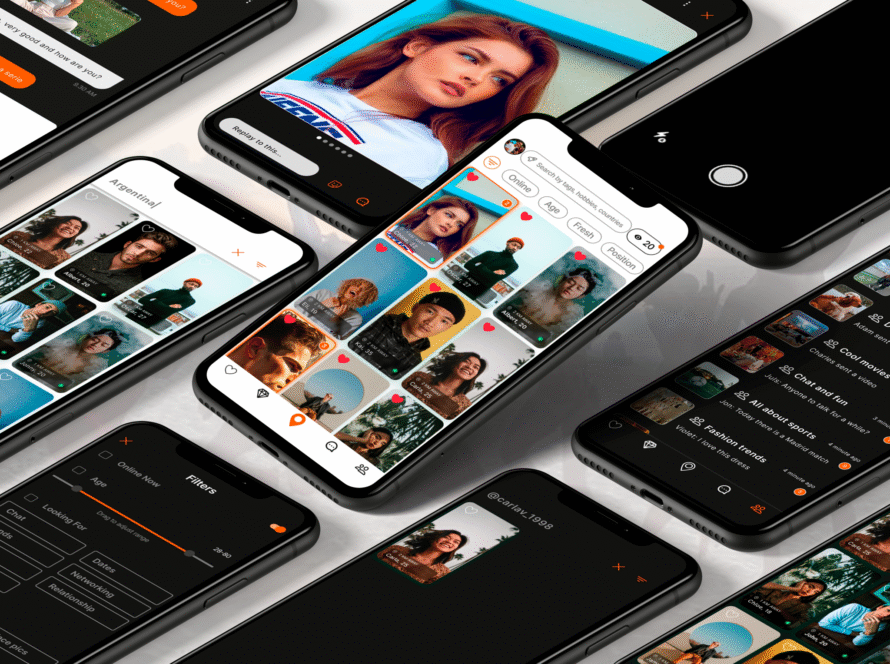


The Best Icebreaker Questions for a First Conversation: 50 Organized by Level
Not all questions are created equal. This guide organizes them into 4 depth levels, explains why each one works, and when to use it. Applicable to chat, first dates, and video calls.
Why Some Questions Connect and Others Kill the Conversation

The conversation that creates connection isn't the longest or most intense: it's the one with the right rhythm of progressive revelation from both sides.
Questions are not all equivalent. Some questions activate the brain's reward circuits, while others block them. The difference isn't about being smarter or funnier: it's about understanding how the process of bond formation works.
The 36 Questions Study (Arthur Aron, 1997): the most cited research on interpersonal connection demonstrates that intimacy doesn't come from revealing deep secrets all at once, but from mutual and progressive revelation through questions organized from least to most deep. Two strangers who followed the 36-question protocol felt significantly closer to each other than control groups with free-flowing conversations. The key: progression and reciprocity.
Follow-up questions (Huang et al., Harvard 2017, JPSP): people who ask follow-up questions —that connect with something the other person just said— are perceived as smarter, more attentive, and more likable. Not generic questions: the ones that show you were listening.
The cognitive cost of a question: every question imposes mental work on the person receiving it. A question that's too open-ended or too intimate for the moment creates discomfort or short answers. A question at the right depth level generates long, spontaneous responses. The optimal depth level at any moment is the one that is one step ahead of the current conversation level, not ten.
The amygdala and the first date (Globol.im, 2025): during the first twenty minutes of a first encounter, the amygdala is in alert mode. Any question that's too personal activates defense mechanisms. That's why Level 1 (light and safe) is essential as a starting point.
"Intimacy doesn't come from the deepest questions, but from the appropriate progression toward them. Jumping too fast creates distance, not connection."— Adapted from Aron et al., 1997, «The Experimental Generation of Interpersonal Closeness»
The 4-Level Depth System
Instead of a flat list of 50 questions, this guide uses a level system inspired by the structure of Aron's study (1997) and adapted to the context of modern dating. Each level has a specific function in the arc of the conversation.
For the first few minutes. Low cognitive cost, no pressure, generates smiles and initial data points.
12 questionsWhen the conversation is already flowing. They reveal values, tastes, and personal history without invading.
14 questionsFor conversations with established chemistry. They generate mutual vulnerability and real trust.
13 questionsOnly when there's real trust. Questions that go to the essence of the other person.
11 questionsLevel 1 — Light and Safe: The 12 Best Opening Questions
These questions have three characteristics: low cognitive cost (they're easy to answer), no pressure (there's no wrong answer), and they generate story-worthy responses (not simple yes/no). They're perfect for the start of a chat, first messages, or the first five minutes of a date.
🌊 Level 1 — Light and Safe
Low cognitive cost · No pressure · To kickstart the conversation
-
This question reveals much more than "What are your hobbies?" without the formal weight of that question. It activates imagination, and the answer is always personal and genuine.
Why it works: the specificity of the scenario (free weekend, no guilt) lowers defenses and generates more honest responses than abstract questions about preferences. It reveals whether the person is introverted or extroverted, active or contemplative, social or solitary.💬 How to follow up: when they answer, connect with something from their plan. "Interesting that you'd choose that—I would've guessed you were more of a..."
-
This question has special power: "no matter how mundane it is" gives permission to give an unexpected, personal answer instead of a "date-appropriate" response.
Why it works: genuine enthusiasm is contagious and creates one of the first real emotional connections. When someone talks about something they're passionate about, their energy visibly changes, and that activates the mirror circuit in the listener.💬 How to follow up: show genuine curiosity about what they say, even if it's something you don't know. "I didn't know anything about that—how did you get into it?"
-
A seemingly trivial question that works for two reasons: the binary format is easy to answer, and "if there is one" invites the story behind the choice, which is where personality lives.
Why it works: binary questions eliminate the blockage of "I don't know what to say." And the invitation to provide context opens the door to personal anecdotes. 90% of responses will have a story. -
The "lately" anchor ties the response to the present, not to abstract preferences from the past. And the open format ("it could be anything") removes the pressure to give the "right" answer.
Why it works: it reveals what's on someone's mind right now, which is more informative about their current personality than their static preferences. Plus, it generates recommendations, which are one of the most natural ways to share something about yourself. -
Binary with room for gray areas. Most people aren't at one extreme or the other, which generates a more nuanced, personal response.
Why it works: it reveals a fundamental personality trait (planning vs. spontaneity) in a light way. And it almost always generates the response: "It depends on the situation..." which opens a conversation about when and why—which is where the substance lies. -
The condition "without having to learn the process" frees the response from pragmatism and activates more genuine desires. It reveals aspirations without the weight of "What would you like to be?"
Why it works: it activates imagination, and the response says a lot about what the person values. Someone who chooses speaking another language vs. someone who chooses cooking vs. someone who chooses playing piano has a very different story. -
"You don't mind confessing" lowers defenses and gives permission for a fun answer instead of an image-conscious response.
Why it works: light, fun vulnerabilities are among the first and most effective forms of connection. When someone admits something "embarrassing" with humor, it automatically activates reciprocity: the other person wants to share theirs too.💬 Have yours ready before you ask. Don't ask without being willing to share yours too.
-
It asks for a story, and stories are the most natural way to generate connection. Plus, it reveals how the person experiences unplanned moments.
Why it works: positive memories activate positive emotions in the present, and the person sharing the memory tends to associate that positive emotion with the person who invited them to relive it. The neuroscience of memory and affection is well-documented. -
"Completely harmless" clarifies the tone: nothing political or divisive. Just a personal stance on something everyday that generates friendly debate.
Why it works: taking a stance creates an "I agree / I don't agree" dynamic that's much livelier than exchanging preferences. The positive tension of light debate is one of the best chemistry generators. -
It asks for a positive revelation that the person probably doesn't share upfront, which makes the response genuine and a little surprising.
Why it works: everyone has something they like about themselves and rarely get a natural opportunity to share it. This question creates that space, and the response is usually one of the most personal at Level 1. -
A very current and slightly self-critical question that generates smiles because everyone has an honest answer.
Why it works: it combines light humor with a universal connection point (we all live glued to our phones with guilt). Shared vulnerability about something everyday is one of the most accessible bonds. -
It asks for something personal and unique, but "weird/strange" gives permission for it to be fun rather than intimate. The combination is perfect for Level 1.
Why it works: personal rituals and quirks are among the most authentic personality traits that exist, and sharing them early generates a feeling of "I'm letting you see something real" that accelerates bonding without being scary.
Level 2 — With Substance: 14 Questions That Reveal Without Invading
These questions carry more weight than Level 1 but remain safe. They reveal values, personal history, and ways of seeing the world without asking for deep emotional vulnerability. Use them when the conversation already has rhythm and you've both responded well to previous questions.
🔥 Level 2 — With Substance
Reveal values and history · Use when the conversation is already flowing
-
It asks for a story of growth or change without directly asking about regrets or mistakes. Being surprised by one's own decisions is a universal and fascinating territory.
Why it works: it reveals the person's capacity for introspection and change. And it almost always generates a story that says much more about them than any direct question about their values. -
One of the most effective questions at this level because it generates humor and reflection at the same time, and reveals how someone's perspective has evolved.
Why it works: everyone has an answer to this question, and it's almost always funny and slightly nostalgic. That mix of emotions is one of the most powerful for creating connection. -
More revealing than "What are you like?" because it asks for others' perspective on oneself, which tends to be more honest and nuanced.
Why it works: self-presentation through others' eyes activates self-reflection and generates much more authentic responses than direct autobiography. -
Generates a response the person has probably wanted to share before but rarely has the space to do so naturally.
Why it works: this question has the effect of "seeing beyond the first impression," which is exactly what someone on a date wants the other person to do. It's a question that validates the person's complexity. -
The clause "it doesn't have to be the most exotic" removes the pressure to impress with the destination and generates more honest, personal responses.
Why it works: moments of positive surprise are memorable and emotionally charged. Asking the person to relive one of those moments activates positive emotions associated with the person asking the question. -
Asks for something the person values about themselves but rarely has space to share in normal conversations.
Why it works: it makes the person feel seen and appreciated for something that's usually invisible. That recognition effect generates affection toward the person who produces it. -
A question that reveals open-mindedness and capacity to evolve, two of the most valued traits in long-term compatibility.
Why it works: people who admit having changed their mind about something project intelligence and maturity. Plus, the response reveals someone's current values, which are more relevant than the ones they had ten years ago. -
The clause "without considering it brave at the time" lowers the pressure to tell something epic and generates more personal, authentic stories.
Why it works: it reveals moments of growth and character without directly asking "tell me something heroic about you," which would generate falsely modest or exaggerated responses. -
A question that values the influence of others and reveals intellectual and emotional openness.
Why it works: people who remember transformative conversations are people with high capacity for listening and reflection, two highly attractive traits. And sharing that conversation with someone new creates the implicit possibility that this one could be too. -
Reveals frustrations, values, and the way the person perceives human nature without being a directly personal question.
Why it works: the things we find hardest to understand about others reveal exactly what we value most ourselves. It's an indirect way to discover someone's deepest values. -
Asks for a description of the type of person they connect with, which is indirectly a description of their own values and ways of relating.
Why it works: generally the response describes traits that the person also attributes to themselves or deeply admires. And hearing that response tells you if there's baseline compatibility. -
A Level 2.5 question: it already has emotional weight, but the frame of "without you having planned it" allows space for both positive and difficult responses.
Why it works: the experiences that have defined us are the ones we most want to share. This question opens the door to that naturally without directly asking "tell me something important about your life." -
Reveals real aspirations and the tension between what someone wants and what they do, which is one of the most human and universal themes.
Why it works: pending projects are places of light vulnerability and genuine desire. Sharing them creates complicity. And the naturally following question "What's stopping you?" opens one of the best conversation spaces at Level 2. -
A question that reveals what someone needs to feel good, which says a lot about their values and how they find meaning.
Why it works: everyday happiness is one of the most precise indicators of compatibility. Someone who has a good day when they connect with people vs. someone who has one when they finish their to-do list have very different ways of living.
Level 3 — Real Depth: 13 Questions for When There's Chemistry
These are the questions from Aron's study: the ones that generate mutual vulnerability and build real trust. Only use them when the conversation already has quality and you've both contributed with honesty. In chat, they may take several exchanges to reach. In person, they may appear after 30-40 minutes.
⚡ Level 3 — Real Depth
Mutual vulnerability · Only when there's already established chemistry
-
A question about purpose and presence that generates very personal, emotionally rich responses.
Why it works: moments of "flow" or total presence are among the most meaningful for people. Sharing one of those moments is sharing something truly intimate. -
A question about real vulnerability that reveals the points where the person has the most difficulty being dependent or opening up.
Why it works: difficulty asking for help says a lot about self-expectations, fear of judgment, and capacity to trust others. And admitting it in a conversation is already an act of trust. -
Directly inspired by Aron's 36 questions. It reveals a lot about family and values without being an invasive question about the past.
Why it works: "one thing" limits the response to the most significant. And the frame of "if you could change" is less threatening than "What was bad about your childhood?"⚠️ Make sure you're willing to share yours too before asking this.
A question about emotional needs that on a date serves a compatibility function: it reveals what type of presence someone needs.
Why it works: unmet emotional needs are among the most determining factors in long-term compatibility. And asking about them carefully in a context of trust is one of the most intimate acts in a conversation.Directly inspired by Aron's 36 questions. One of the most effective because it opens the space for what someone wants to say but doesn't say.
Why it works: it generates responses that the person rarely shares, which creates a sense of privilege for whoever listens. "You asked me, and I haven't told anyone" is one of the turning points of real connection.Asks for vulnerability but also reflection. The second part ("how has it changed") is important: it shows evolution, not just a wound.
Why it works: sharing a real fear with someone is one of the most significant acts of trust. The second part shows it's not just a confession but an active reflection on one's own life.The distinction "not of an external achievement" directs the response toward character, not résumé. It's a question of deep identity.
Why it works: pride in oneself for reasons of character is one of the most intimate and least shared emotions. The person who shares it is showing something essential about their self-concept.One of the deepest questions at this level. Only use it when there's a lot of trust and in a context where the person feels safe.
Why it works: self-compassion is one of the clearest indicators of emotional health. And sharing what's hardest to forgive oneself is an act of deep vulnerability that, when received with empathy and without judgment, creates a very solid bond.⚠️ This question only in a context of high trust. If there's the slightest discomfort in the conversation, don't use it.
A question about hidden insecurities that can only be asked when there's enough trust for the response to be honest.
Why it works: insecurities that aren't visible from the outside are the most intimate. Sharing them is an act of trust that generates reciprocity and deepens the bond in a very significant way.A question about important relationships without directly asking about ex-partners or losses. The frame "who you want to be" orients it toward learning and growth.
Why it works: the relationships that have taught us the most are the ones that matter most to us. Sharing which one that is for someone and why is one of the most direct ways to know their deep relational values.A question about accepting real life that generates very honest responses about someone's emotional friction points.
Why it works: what's hardest to accept reveals both values and unmet expectations. And sharing it in a trusting conversation is one of the most significant acts of vulnerability at Level 3.A variation on the classic "bucket list" but with a more urgent, emotional tone that generates more honest responses about what really matters.
Why it works: the things we feel we must do "before too much time passes" reveal our deepest priorities, often more clearly than any direct question about values.Inspired by Aron's 36 questions. It can refer to someone who has passed away, someone you drifted from, or someone you lost contact with.
Why it works: the unsaid things are among the most emotionally charged spaces that exist. This question opens that space safely and almost always generates one of the deepest responses in the entire conversation.⚠️ Be very sensitive to what they share. This question can reach emotionally very delicate territory.
Level 4 — Intimate and Bold: 11 Questions for When There's Already Trust
These questions go to the essence. Use them only when there's real trust and the conversation has moved honestly through the previous levels. They're the ones that define whether there's deep compatibility or not. In chat, they may never come up. In person, they appear on the second or third date, not the first.
💎 Level 4 — Intimate and Bold
Only with real trust · Second date or very advanced conversation
-
A question about relational needs that at Level 4 has its full power because the person already has enough trust to be honest.
Why it works: what's hard to admit wanting is usually what's needed most. This question opens that space of intimate vulnerability that generates the deepest bonds. -
A question about active personal growth process. It reveals self-awareness and honesty about one's current limits.
Why it works: people with the capacity to identify what they're growing in have a level of self-awareness that predicts relational compatibility. And sharing it is an act of humility and honesty that generates a lot of respect and connection. -
Asks for the story the person feels most representative of their identity. It's the most essential version of their personal narrative.
Why it works: the story someone feels is most "that's so me" reveals the core of their identity better than any other question. And listening to it with real attention is one of the most powerful acts of connection. -
One of the most direct questions about the desire to be seen and understood. It generates high-intimacy responses.
Why it works: the desire to be understood is one of the most fundamental human needs. This question creates the opportunity to try to understand that. And the act of truly trying is one of the most powerful bond generators. -
Directly from Aron's 36 questions. One of the most effective for generating quick mutual vulnerability.
Why it works: crying is one of the most intimate emotional responses. Asking about it and sharing it creates a sense of very real, very fast closeness when there's enough trust to do so.⚠️ Only in a context of high trust and clear reciprocity. Share yours immediately after as well.
A question about unspoken fears that only makes sense at Level 4. "That you haven't yet said out loud" signals that something genuinely intimate is being asked for.
Why it works: fears that haven't been verbalized are the most emotionally charged. When someone shares them for the first time, the context of that revelation becomes meaningful.A question about authenticity and its costs. It reveals moments where the person chose their values over the easier path.
Why it works: moments of integrity at a high cost are defining of character. This question accesses one of the most essential territories of someone's identity.A direct question about the most protected parts of oneself. At Level 4, with established trust, it generates responses of extremely high depth.
Why it works: what's hardest to let others see is generally the most important thing about the person. And the willingness to talk about it in a conversation is a sign of real trust that reinforces the bond exponentially.A question about the gap between real life and desired life that generates reflection and honesty about what really matters.
Why it works: the response reveals exactly which priorities routine or fear prevent from being updated. It's one of the most direct questions about "real self vs. lived self" that exists.A question about self-knowledge and moments of identity clarity. It reveals the foundational moments of the person.
Why it works: moments of clarity about who we are are among the most meaningful that exist. Sharing them is sharing the core of one's own story.The question that closes the cycle. Directly from Aron's 36 questions. It returns control of the narrative to the other person and generates the most personal response possible.
Why it works: it empowers the responder to share exactly what they want the other person to know. That's an act of deep respect that the person perceives even if they don't verbalize it. And the response is usually the most revealing of the entire conversation.💬 This is the last question you should ask in any conversation that has made it this far. Listen with your full attention.
When to Use Each Level: Chat, First Date, or Video Call
| Context | Level 1 | Level 2 | Level 3 | Level 4 |
|---|---|---|---|---|
| First messages on app | ✔ Perfect | ✔ Yes, if it flows | ⚠️ Too soon | ✗ Never |
| Chat with established chemistry (several days) | ✔ As a base | ✔ Main focus | ✔ With care | ⚠️ Very rare in chat |
| First in-person date | ✔ First 15 min | ✔ Main body | ✔ If there's chemistry | ⚠️ Only if it flows very well |
| Video call before date | ✔ All the time | ✔ Halfway | ⚠️ Rare on video | ✗ Not on video |
| Second date | ✔ To warm up | ✔ Yes | ✔ Main focus | ✔ If there's a foundation |
What You Should Never Ask in a First Conversation

There are questions that activate defense mechanisms in the first minutes and destroy the conversation before anything real can be built.
| Question to avoid | Why it damages the conversation | Alternative |
|---|---|---|
| "What exactly are you looking for?" | Too direct for Level 1. Activates defenses and makes the conversation feel like an interview. | Let that reveal itself naturally through other questions. Levels 3-4 are the time for that. |
| "How many relationships have you had?" | Intrusive and without context. Says nothing relevant about the person and generates immediate discomfort. | Level 3 questions about relationships, which go to the essence without the number. |
| "Why are you single?" | Implies something is wrong. One of the most resented questions in the dating world. | Let the person share their story at their own pace. If there's trust, they will. |
| "How much do you earn? / How much does that cost?" | Invasive and signals values that most people don't want to project. | Level 2 questions reveal values without needing direct economic data. |
| "How are things with your exes?" | High emotional load, mined territory, automatic defense activation. | Level 3, question 36: "the relationship that taught you the most." Much richer and without the baggage. |
| "Do you want to have kids?" | Fundamental compatibility question but too serious for the start. Generates pressure. | Comes up naturally in more advanced conversations about the future and values. |
| "Why didn't you respond earlier?" | Generates guilt and puts the other person on the defensive. Destroys the energy of the conversation. | Don't ask. If there's a pattern of disinterest, it already tells you what you need to know. |
Frequently Asked Questions About Dating Icebreakers
📚 Sources and references
- Aron, A. et al. (1997). The Experimental Generation of Interpersonal Closeness. Personality and Social Psychology Bulletin, 23(4), 363–377. The 36 questions study.
- Huang, K. et al. (2017). It Doesn't Hurt to Ask: Question-Asking Increases Liking. Journal of Personality and Social Psychology, 113(3), 430–452.
- Mehl, M.R. et al. (2010). Eavesdropping on Happiness: Well-being Is Related to Having Less Small Talk and More Substantive Conversations. Psychological Science, 21(4), 539–541.
- Globol.im — 7 Psychological Strategies to Break the Ice on a First Date (2025). Reference to the amygdala in the first minutes of a date.
- Cacioppo, J.T. & Patrick, W. (2008). Loneliness: Human Nature and the Need for Social Connection. Norton. (Mutual revelation as a bonding mechanism.)
- Xder — Community and safety principles; Xder Blog.
Questions aren't tricks to make someone like you. They're tools to create the space where real connection can happen. The difference between a list of 50 questions and a 4-level system is exactly that: the system respects the time trust needs to build, and trust is the only thing that allows the deepest questions to generate connection instead of discomfort.
Start at Level 1. Listen genuinely. Add something of your own. Move up a level when the other person is already open, not when you want them to be. That's not a seduction technique: that's how human relationships work.
And if you're looking for an environment where conversation has more starting context —shared interests visible on profiles, themed groups, and real verification— Xder facilitates that from the very first moment. Start here →